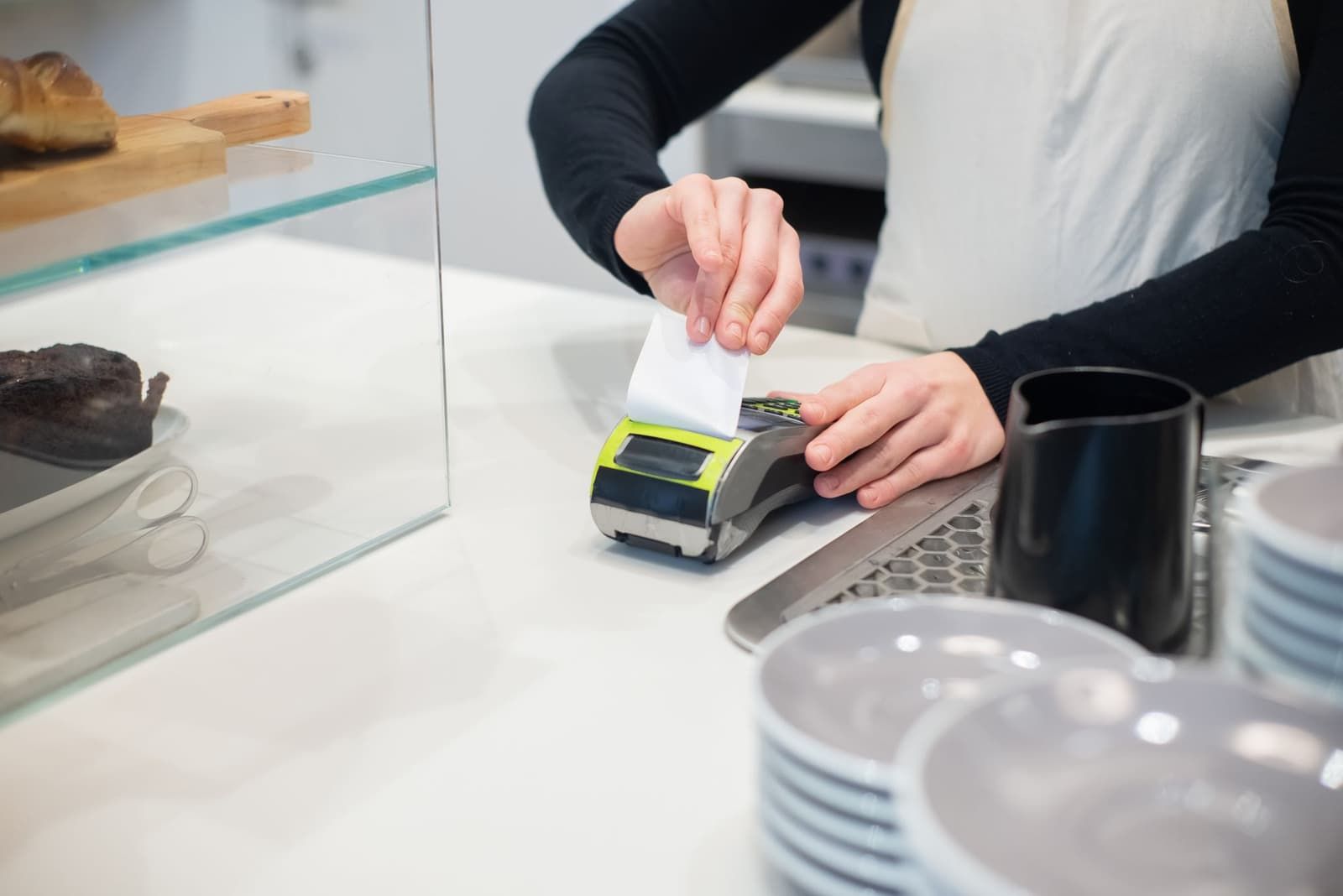
Since 1 October 2026, Australian businesses can no longer add a surcharge when a customer pays by eftpos, Mastercard, Visa or American Express. The cost of taking cards hasn’t gone away, so the fix is to build it into your everyday prices, check whether your merchant fees have dropped under the new interchange caps, and decide whether a discount for a cheaper payment method suits your business.
If you’ve been adding 1.5 per cent at the till for years, this is a real change to your margin. The good news is that it’s very manageable with a couple of hours of number-crunching. Here’s how to do it.
What exactly changed on 1 October 2026?
Three things happened on the same day, and they work together.
- No more card surcharges. After its review, the Reserve Bank concluded surcharging on debit, prepaid and credit cards on the eftpos, Mastercard and Visa networks should end. Those networks now have “no surcharge” rules, and American Express removed surcharging from the same date. The RBA’s FAQs note that the card networks are responsible for enforcing their own rules.
- Lower interchange caps. Interchange is the fee your provider pays the cardholder’s bank on each transaction, and it’s baked into what you’re charged. The RBA cut the cap on domestic consumer credit cards to 0.3 per cent of the transaction, and on debit and prepaid cards to 8 cents (or 0.16 per cent where it’s charged as a percentage).
- More fee transparency. The card networks and large acquirers must publish specified fee information by 30 October 2026, with more detail on interchange flow-through due by 30 January 2027. Caps on foreign-issued cards follow from 1 April 2027.
The RBA’s media release says small businesses “should benefit the most” from the lower caps, because they tend to pay fees closer to the old limits. That’s the upside. The catch is that the saving doesn’t land in your account by itself — and you’ve just lost the surcharge that used to cover the cost.
What’s still allowed?
Plenty, which is good news for owners who feel boxed in. According to the ACCC’s card surcharge guidance:
- You can raise prices to recover the cost of accepting cards. You just can’t give false or misleading reasons for the increase.
- You can offer a discount for a payment method you prefer, such as cash or bank transfer. The price you display must be the full price a customer pays without that discount.
- Weekend, public holiday and service fees aren’t affected by the card surcharge rules, although they still need to be displayed clearly.
- Other payment methods such as buy now pay later aren’t currently covered by RBA surcharge regulation. Check with your provider before charging anything extra on them.
What you can’t do is call a card surcharge something else. A “payment processing fee” or “card admin fee” added at the till is still a card surcharge in all but name.
How much is the ban really costing you?
Before you change a single price, work out your actual card cost. Most owners have only a rough idea. It takes about 20 minutes with your latest merchant statement.
- Add up your total card fees for last month. Include the per-transaction fees, any monthly terminal rental and any minimum monthly charges.
- Find your total card sales for the same month. It’s on the same statement.
- Divide fees by card sales. That’s your effective card cost as a share of card sales.
- Multiply by the share of all your sales paid by card. For most cafés and shops, this is the large majority.
That final figure is the share of your total revenue you need to recover through pricing. For many small businesses it lands somewhere around 1 to 2 per cent of sales, but yours could be lower or higher, so use your own numbers rather than a rule of thumb.
Worked example — illustrative only. A suburban Adelaide café takes $60,000 a month, and $54,000 of that comes in by card. Last month’s merchant statement shows $810 in fees, including terminal rental.
Step Calculation Result Card cost share of card sales $810 ÷ $54,000 1.5% Card sales share of all sales $54,000 ÷ $60,000 90% Cost to recover across all sales 1.5% × 90% 1.35% Until September, the owner added a 1.5 per cent surcharge to card payments, which brought in roughly the same as the fees. Now the café needs to lift average prices by about 1.4 per cent just to stand still. On a $5.20 flat white, that’s about 7 cents — so the owner moves it to $5.30, leaves the $4.80 batch brew where it is, and nudges the toasties and slices instead. Across the menu, the average rise covers the fees without any single item jumping.
Notice the owner didn’t raise every price by the same percentage. That’s the art of it, and it’s the next step.
How should you reprice without scaring customers?
Customers are expecting this. The RBA found 76 per cent of consumers wanted surcharging to stop, so a clean price with no add-on at the till is a win for the customer experience. Here’s a practical way to reprice:
- Start with your top 20 sellers. They usually make up most of your revenue, so small changes there do the heavy lifting.
- Protect your “signal” prices. Every business has a few items customers remember — the coffee, the haircut, the call-out fee. Leave them alone or move them least, and recover more on add-ons and less price-sensitive lines.
- Round sensibly. Prices ending in 10 or 50 cents feel natural. Odd-looking jumps invite questions.
- Check your quote templates and online store. Trades and service businesses often have surcharge lines buried in invoicing software. Remove them and adjust the base rate instead.
- Update everything at once. Menus, shelf tags, the website, delivery apps and invoice templates should all match, because your displayed price must be the full price.
- Keep your explanation honest and short. “Our prices now include card fees — no extra charges at the counter” is accurate and reassuring. Don’t blame a cost that isn’t real.
If you trade in hospitality or retail, our hospitality and retail pages cover the wider cash flow picture for card-heavy businesses.
Should you offer a cash discount instead?
It depends on your customers. A small discount for cash or bank transfer can make sense if:
- you take large one-off payments, such as a trade job or event booking, where card fees really add up;
- a meaningful share of your customers already pay by transfer;
- you’re happy to handle more cash, with the banking runs and security that come with it.
For a busy café or retail counter, though, a cash discount often creates more hassle than it saves. Cash use in Australia has settled at a small share of everyday payments, and most customers will tap regardless. For most counter businesses, building the cost into the price is simpler and easier for customers to follow.
Will your merchant fees actually go down?
They should fall for many small businesses, but don’t assume it. Here’s a quick fee check for this month:
- Compare your October merchant statement with September’s. Has the cost per card transaction dropped?
- Look at your plan type. Blended or flat-rate plans may not pass on interchange cuts straight away.
- Check for terminal rental, minimum monthly fees and “premium card” charges.
- From 30 October 2026, compare your provider against the fee information networks and large acquirers must publish.
- Ask your provider directly what the new caps mean for your pricing. Get the answer in writing.
If your card cost hasn’t moved, that’s worth a phone call. Switching providers is usually straightforward, and even a fraction of a per cent on a few hundred thousand dollars of card sales is real money every year.
Need a little breathing room while new prices settle in? Check your options in 60 seconds — it doesn’t affect your credit score.
What does this mean for cash flow over the next few months?
For most businesses, losing surcharge income won’t create a sudden hole. It’s a slow leak. Each week, the fees come out and the surcharge doesn’t come in. If you take a few months to finish repricing, that gap builds quietly — and it lands right as Christmas stock, holiday wages and the 28 October BAS due date (for July–September quarterly lodgers) come around.
A few ways to keep it under control:
- Reprice now, not after Christmas. Every month you wait is another month of fees with nothing covering them.
- Track your gross margin weekly for the first quarter. If it slips, you’ll see it early.
- Plan the peak separately. Our seasonal cash flow planning guide shows how to map stock and wages ahead of your busy months.
- Use finance to smooth timing, not to cover a broken margin. If repricing fixes the margin but the timing pinches, a business line of credit gives you a buffer you draw on only when needed. For card-heavy businesses, a merchant cash advance has repayments that rise and fall with your takings, which can sit comfortably alongside a busy summer.
Your 30-minute action list
- Remove surcharge settings from your terminal, online checkout and invoice templates.
- Work out your effective card cost from your latest merchant statement.
- Reprice your top 20 sellers to recover it, protecting your best-known prices.
- Update menus, shelf tags, website and delivery apps on the same day.
- Decide whether a payment-method discount suits your business.
- Diarise 30 October to compare merchant fees.
- Check your cash flow plan covers BAS, Christmas stock and holiday wages.
Repriced and ready for summer? Make sure the cash is there too
The surcharge ban is one of those changes that rewards owners who act early. Get your prices right this month and you’ll go into the busy season with a clean, competitive price list and a margin that holds up. Sometimes, though, the timing just doesn’t line up — the new prices are working, but stock orders, BAS and summer wages all land before the extra takings do. That’s exactly the kind of gap we help everyday businesses bridge.
Here’s how it works with us:
- About 60 seconds to enquire, with no credit check when you first get in touch.
- Your details aren’t sent to a pile of lenders. No spray and pray, and no phone ringing off the hook from people you’ve never heard of.
- A real person reviews your situation — your trade, your season, your card takings — and calls you to talk through what fits.
- Please fill the form in accurately. Honest numbers on turnover and what you need help us match you with the right option the first time.
Finance from $20,000 to $500,000, with decisions in as little as 4 hours and same-day funding possible once approved.
Ready when you are
Check your options in about 60 seconds
A few quick questions. Asking won't touch your credit file, your details aren't sent to a pile of lenders, and a real person reads every enquiry.
Your path to funds
This week
Remove surcharge settings from your terminal, website and invoices
This week
Work out your real card cost as a share of sales
This month
Reprice your top sellers to absorb that cost
From 30 October
Compare your merchant fees against published pricing
Next quarter
Review margin and cash flow with three months of new data
Questions we get asked
Can I still charge a surcharge on credit cards in Australia?
No. Since 1 October 2026, surcharges can't be added to debit, prepaid or credit card payments on the eftpos, Mastercard and Visa networks, and American Express removed surcharging from the same date. The card networks set and enforce these no-surcharge rules.
Can I offer a discount for cash instead?
Yes. The RBA has confirmed businesses can still offer a discount for a particular payment method. Your displayed price must be the full price a customer pays if they don't get the discount, so show the higher price and advertise the discount separately.
Does the ban stop weekend or public holiday surcharges?
No. The ACCC says the new rules only cover card payment surcharges. Weekend, public holiday and service fees aren't card surcharges, but they still need to be shown clearly and can't mislead customers.
Can I put my prices up because of the surcharge ban?
Yes, you can adjust prices to recover the cost of taking cards. What you can't do is give false or misleading reasons for an increase, so keep any explanation to customers accurate and simple.
Will my merchant fees go down automatically?
Not necessarily. Lower interchange caps started on 1 October 2026, but how much flows through to you depends on your plan and provider. Check your October statement and compare it with your September one before assuming you're saving.
How do I get a better deal on card fees?
Work out your total card cost as a share of card sales, then get quotes on the same basis. From 30 October 2026, the card networks and large acquirers must publish fee information, which makes comparing providers much easier.
What if repricing leaves me short on cash for a few months?
Lost surcharge income usually shows up as a slower squeeze, not a sudden hole. A line of credit or merchant cash advance can smooth the gap while new prices settle in, as long as the new pricing genuinely fixes the margin underneath.