To start a mobile mechanic business in Australia, sort your licence or tradesperson certificate (NSW and WA require one for mobile repairers), take out public liability insurance, then budget for a van, tools, a scan tool and a parts float: cash that carries parts until customers pay. The van and tools can be financed. The float is what catches people out.
Here’s the order to do it in, with a costed checklist you can fill in with your own quotes.
Do you need a licence to be a mobile mechanic?
It depends on your state, so check before you spend a cent on a van. NSW Fair Trading says a motor vehicle repairer licence is needed if you run a mobile repair business, and WA’s Consumer Protection has a repair business licence that covers mobile operators.
In NSW the licence runs for 1, 3 or 5 years, and Fair Trading assesses whether you’re fit and proper and have enough financial resources to run the business. Signage matters too: for a mobile operator the sign can be fixed to your vehicle. In WA, the applicant needs premises, including mobile premises, that are suitable for repair work, plus the tools and equipment to do it.
Other states have different arrangements, and some don’t have one general repairer licence at all. Ring your state’s fair trading or consumer affairs office and ask what applies to someone who repairs vehicles at the customer’s address. Also confirm your own trade qualification: in NSW, a licensed repairer still needs tradespeople to hold the motor vehicle tradesperson certificate.
Official pages: NSW Fair Trading and WA Consumer Protection.
What does a mobile mechanic van setup cost?
A van setup is the biggest single line in your budget, and it’s mostly a choice between a newer van on finance and a used one paid in cash. Build the total from quotes, not from a blog’s average, because the range between a tidy used van and a new fit-out is wide.
Use this as a worksheet. The right-hand column is empty on purpose.
| Item | What to price | Finance or cash? |
|---|---|---|
| Van or ute | New vs used, plus registration and CTP | Finance (equipment finance) |
| Racking and fit-out | Shelving, drawers, tie-downs, a power inverter | Finance with the van if the dealer or upfitter bundles it |
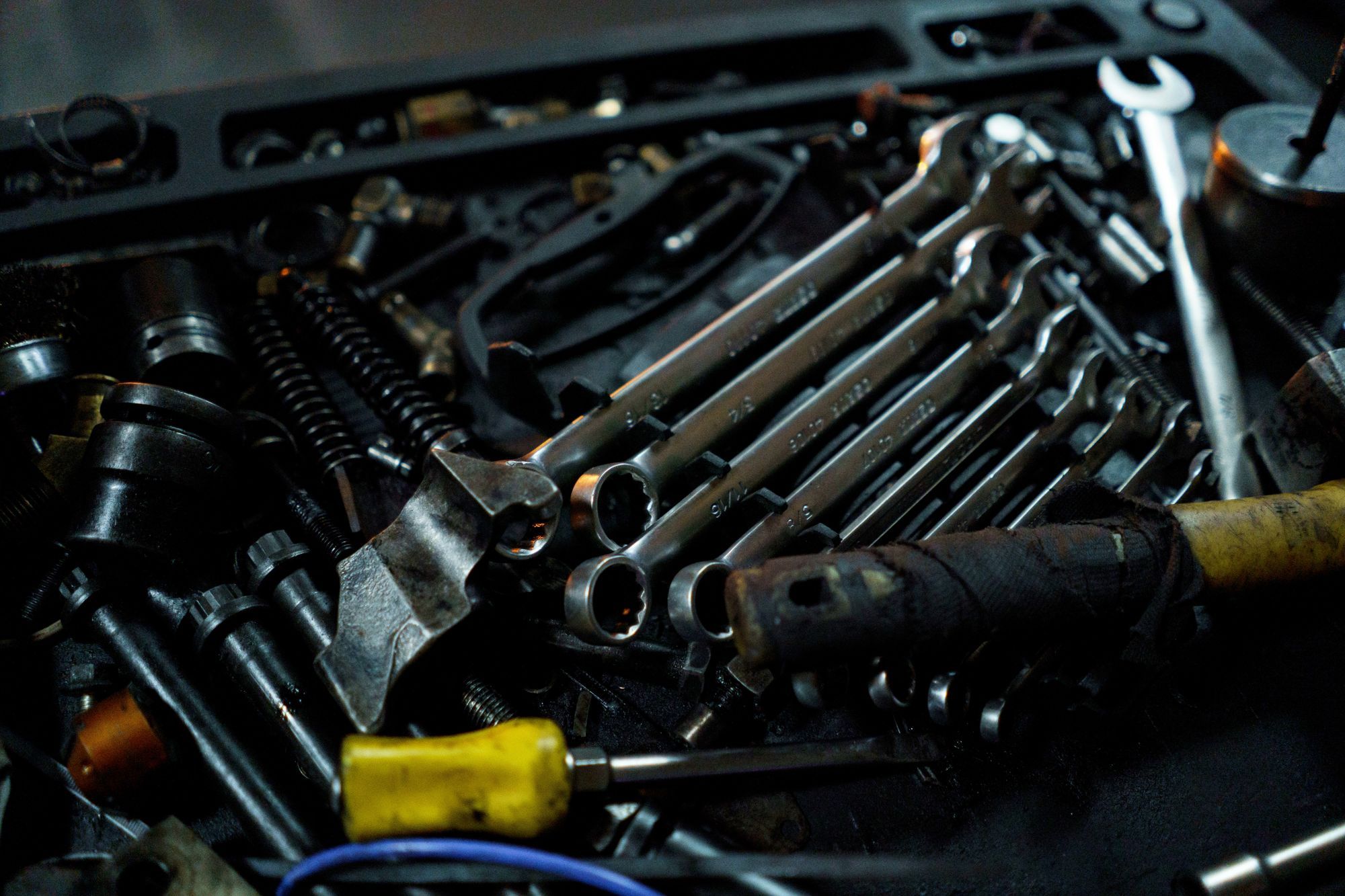
| Hand and power tools | Socket sets, torque wrenches, impact gun, spanners | Cash, or a small loan |
| Jacks, stands, creeper | Rated for the vehicles you’ll lift | Cash |
| Diagnostic scan tool | Entry-level reader vs a professional bi-directional scanner | Depends on price |
| Public liability and tools insurance | Quotes from two brokers | Cash (monthly) |
| Licence and certificate fees | Your state’s fee schedule | Cash |
| Waste oil and fluids containers | Compliant storage and disposal | Cash |
| Software and invoicing | Quoting, payments, bookkeeping | Cash (monthly) |
Of everything on that list, the scan tool shows the widest spread. Australian retailers currently list the Autel range from about $750 for entry-level models to around $5,700 for the Ultra, with EV-capable units listed well above that. Those are retailer snapshots, so check today’s price. The point is that you don’t need the top model on day one. Buy for the cars you’ll actually work on and upgrade when the work pays for it.
What should you finance and what should you pay in cash?
Finance the big, long-lived items that earn money straight away, usually the van and fit-out, and pay cash for small tools and anything you’ll replace within a year or two. That keeps your cash for the thing that really squeezes new mechanics: stock and slow-paying customers.
A rough rule of thumb:
- Finance: the van or ute and anything permanently fitted to it. Equipment finance usually uses the equipment itself as security, and FastBiz Loans’ range is $20,000 to $500,000.
- Cash or a small loan: hand tools, jacks, the scanner if it’s under a few thousand. A small business loan from $20,000 fits a tool kit or a first parts float.
- Flexible credit: a business line of credit suits the parts float, because you draw on it when you buy parts and repay it when the customer pays.
If you’re still under six months of trading, the startup business loan ($20,000 to $150,000, assessed case by case with owner experience counting) is the product built for you. A mechanic with years behind a workshop counter is a very different proposition to someone starting from scratch, and the assessment recognises that.
Thinking about enquiring? Checking your options takes about 60 seconds and doesn’t touch your credit score: see what you could borrow →
How does the $20,000 instant asset write-off help?
The instant asset write-off lets a small business claim an immediate tax deduction for the business portion of each eligible asset costing less than $20,000. The ATO says the $20,000 limit is permanent from 1 July 2026, for businesses with turnover under $10 million.
That fits a mobile mechanic’s tool-by-tool shopping list well. A scanner at $2,500, a compressor and a set of jacks can each be written off in the year you first use them, provided each costs under the limit. A van is different: if it costs more than $20,000 it’s depreciated over time instead, and cars have their own limits, so ask your accountant how your specific vehicle is treated.
Two cautions. A deduction reduces your tax; it doesn’t put cash in your account when you pay the invoice. And the asset must be first used or installed ready for use in the year you claim. Our guide to equipment finance and the instant asset write-off walks through how finance and the write-off work together. The ATO’s own page is here: $20,000 instant asset write-off.
How do you fund the parts float and the quiet weeks?
Treat the float as a separate line in your budget. A mobile mechanic buys parts before the customer pays, so every job puts your cash out for a few days. Set aside enough to carry a handful of jobs at once, plus eight to twelve weeks of fixed costs, because a new business rarely fills the diary in month one.
Three habits keep the float small:
- Quote the parts first. Get the customer’s yes, then order. The van isn’t a parts warehouse; carry consumables like oil, filters, wipers and globes, and little else.
- Take a deposit on bigger parts. For a part that costs more than an ordinary day’s takings, ask for a deposit or payment upfront.
- Charge on completion. Card payment on the day shortens the gap to hours. Fleet and trade customers on 14 or 30-day terms stretch it, so price that wait in.
This gap between paying out and being paid is the working capital cycle, and it’s why a business can be busy and still short of cash. Our guide on the working capital cycle shows how to count it. If you take on fleet or builder customers who pay on invoice, invoice finance can release cash tied up in those invoices.
Worked example: a one-van mechanic’s first three months
This is an illustration with round numbers, not a quote or a forecast. Say a qualified mechanic buys a used van and fits it out for $38,000, financed over several years. Tools and a mid-range scanner cost another $6,000 in cash. Insurance and licence fees are paid monthly.
Month one, bookings are thin: eight jobs. Month two, word of mouth kicks in: fifteen jobs. By month three, the diary holds around twenty-two. The van repayment is the same all three months, which is why it helps to have a parts float and a buffer in place before the first booking, not after the first bill.
The mechanic who budgets for a slow month one is calm when it happens. The one who spent every dollar on the van is on the phone to suppliers.
What’s the smartest order of steps?
Do the paperwork before the purchases. Licence and insurance first, then ABN and bank account, then the van and tools, then finance, then the first booking. That order avoids buying a van you can’t legally work from.
- Confirm the licence or certificate rules for your state.
- Get insurance quotes: public liability and tools cover.
- Register your ABN and open a business bank account. business.gov.au has a funding overview to compare options before you commit.
- Collect quotes for the van, racking, tools and scanner.
- Work out your monthly repayments and test them against a slow month.
- Check your finance options, and only then sign for the van.
Ready to fund the van and the tools?
Starting your own mobile workshop is a big step, and the best time to line up the money is before you’re standing at the dealership with a deposit due. If the numbers above look workable, the next move is simple.
Enquiring with FastBiz Loans takes about 60 seconds, and your credit file isn’t touched just for asking. We don’t pass your details around a pile of lenders, so your phone stays quiet. A real person looks at your individual situation and gives you a call. All we ask is that you fill the form in accurately, so we can match you to the right option first time.
Ready when you are
Check your options in about 60 seconds
A few quick questions. Asking won't touch your credit file, your details aren't sent to a pile of lenders, and a real person reads every enquiry.
Your path to funds
Step 1
Check your state's repairer licence and tradesperson certificate rules
Step 2
Get public liability insurance and register your ABN
Step 3
Price the van, racking, tools and scanner from real quotes
Step 4
Decide what to finance and what to pay in cash
Step 5
Set aside a parts float and 8 to 12 weeks of running costs
Questions we get asked
Do you need a licence to be a mobile mechanic in Australia?
It depends on the state. In NSW, Fair Trading says you need a motor vehicle repairer licence if you run a mobile repair business, and WA's Consumer Protection has a repair business licence that covers mobile operators. Other states differ, so check with your state's consumer affairs or fair trading office before you buy a van.
How much does it cost to start a mobile mechanic business?
There's no single number, because it swings on whether you buy a new or used van and how much diagnostic gear you need. Build the budget from quotes: van, racking, hand tools, jacks and stands, a scan tool, insurance, licence fees and a parts float. Professional scan tools alone are listed at roughly $750 to $5,700 at Australian retailers.
Can I use equipment finance for a work van and tools?
Usually, yes. Equipment finance is built for vehicles, tools and machinery, and the equipment itself is normally the security. FastBiz Loans' equipment finance runs from $20,000 to $500,000. A scan tool or a small set of hand tools is often better paid in cash or covered by a smaller loan.
Does the $20,000 instant asset write-off cover my van and tools?
It can cover each asset that costs less than $20,000, if your business turnover is under $10 million and the asset is first used or installed ready for use. The ATO says the limit is permanent from 1 July 2026. A van above that price is usually depreciated instead. Your accountant should confirm how it applies to your van.
Can a brand-new mobile mechanic business get a loan?
Sometimes. FastBiz Loans' startup loan ($20,000 to $150,000) is assessed case by case for businesses under 6 months trading, and owner experience counts. Standard business loans need 6+ months trading and $5,000+ in monthly revenue. A qualified mechanic with a trade history is in a stronger position than someone with none.
How do I handle the cost of parts as a mobile mechanic?
Carry a lean stock of consumables, buy job-specific parts after quoting, and take a deposit on larger orders so you aren't funding a customer's parts. The gap between paying a supplier and being paid by the customer is a working capital gap, and a small line of credit can cover it.
Does enquiring with FastBiz Loans affect my credit score?
No. The 60-second enquiry doesn't affect your credit score. A real person looks at your situation and calls you, and your details aren't sent to a pile of lenders.